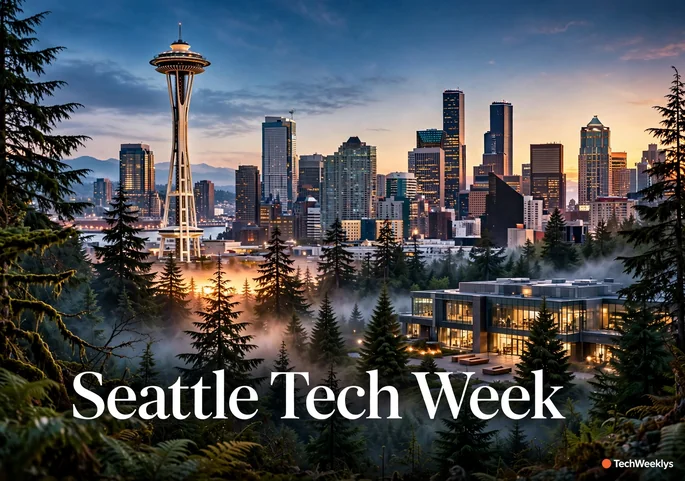
Imagine an entire city turning its calendar over to startups for one week. What does a tech week look like when there is no main stage at all? The answer is Seattle Tech Week, a giant, open source conference where every panel, workshop, and happy hour comes from a different host. This guide covers how the week grew, what happened in 2026, and how to join the next one.
What Is Seattle Tech Week?
Seattle Tech Week, also called STW, is an open, community led conference spread across the whole city. Founders, operators, VCs, and community leaders host the events themselves. The week highlights the region’s core strengths: AI and machine learning, cloud and developer tools, biotech and life sciences, and space and robotics. Regional leaders such as Amazon, Microsoft, the University of Washington, and AI2 host programs, and newer groups add fresh events every year.
The city brings deep roots to the table as the birthplace of the cloud and home to some of the world’s densest AI talent.
How Seattle Tech Week Started and Grew
Madrona says the week began four years ago, when its team decided the local tech community deserved an annual homecoming. Madrona leads the week with a committee of local partners, including Ascend, J.P. Morgan, SVB, Wilson Sonsini, Perkins Coie, and Plug and Play.
| Edition | Dates | Size |
|---|---|---|
| 2024 | Early August | Programs included the Startup425 Eastside Summit at Bellevue City Hall on August 1 |
| 2025 | July 28 to August 1 | Nearly 200 events |
| 2026 | July 27 to 31 | Roughly 250 events |
The 2026 edition marked the fourth year in a row for Seattle Tech Week, and it grew by about a quarter over 2025.
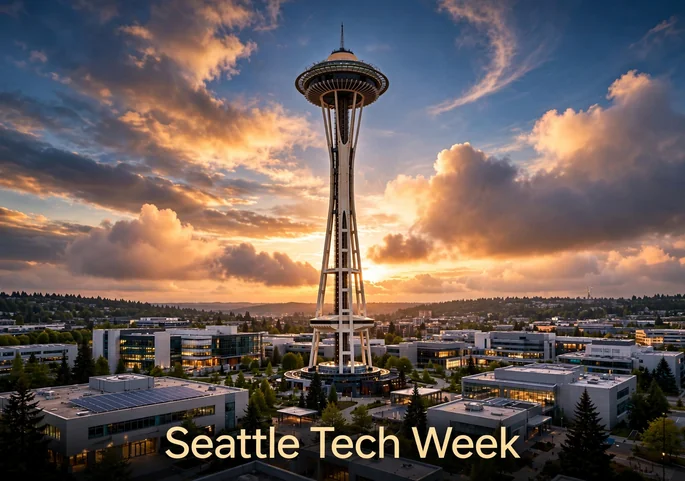
Seattle Tech Week 2026 Recap
The 2026 edition ran Monday, July 27 through Friday, July 31, and delivered roughly 250 events across five days. It started on Monday night with pickleball at Picklewood Paddle Club in SoDo. Madrona, J.P. Morgan, and Vercel presented the official kickoff, with pros on hand to teach beginners. The week ended five days later with a rooftop happy hour, a Lake Union cruise, and a Mariners game.
In between, events took place in boardrooms, incubators, coworking spaces, on an Amtrak train, and at an axe throwing range. GeekWire’s Todd Bishop reported waiting lists for many sessions. He noticed two things: lots of job seekers, and many visitors from the Bay Area, including investors sizing up the region.
AI Led the Calendar
AI was the main thread through the week. AI House at Pier 70 filled its waterfront space, with attendees spilling onto the deck overlooking Elliott Bay. Ascend’s “Foundation Models Go Vertical” panel proved so popular that its founding partner said 600 people had tried to get in. Madrona hosted “Building Enduring AI Products” with AWS and OpenAI, where the takeaway was that defensibility now lives in your data, your expertise, and your loop with customers, not in the model itself.
A live Founded and Funded recording, taped with PitchBook, noted that 80 to 90 percent of venture dollars now flow into AI, with about ten companies collecting two thirds of it.
Space, Biotech, and Deep Tech
The Space Tech Luncheon, hosted by SVB and Wilson Sonsini, featured founders from Starcloud, Starfish Space, and Portal Space Systems. They argued that Seattle is the satellite capital of the world. Past editions also spotlighted biotech, with a startup showcase on the University of Washington’s Fluke Hall rooftop in 2025 and a New Space panel with leaders from Starfish Space and Radian Aerospace.
Events That Looked Like Play
Pickleball in SoDo, sunrise yoga on Lake Union, and a Dog Dash 5K through the Fremont Cut brought the play. The first Bury the Hatchet tournament had 32 companies compete in an axe throwing bracket and raised money for Treehouse, which supports youth in foster care. WTIA’s Tech BBQ Throwdown saw Team Startup beat Team VC and Team Angel for the second straight year. Gradial’s Ship Code at Sunset hackathon rounded out the playful side.
Community and Inclusion
“The Latino Role in Tech,” the week’s first Latino centered event, was cohosted by Latino Founders, Startup425, Seattle ALPFA, Latinas in Tech, and SOMOS.tech. The women in tech lineup included TiE Seattle Women, Ahana Collective, Women in Bio, Project W, and Armoire. At the Venture Black and PitchForce event, 27 founders pitched more than 30 investors over five hours.
Where the Week Happened
SoDo hosted the kickoff party and pickleball courts. The waterfront held AI House at Pier 70 and the Elliott Bay decks. Downtown and Belltown centered on The Showbox, which hosted J.P. Morgan’s Startup Showcase. Belltown is also home to the Labour Temple, a 1942 Art Deco building at 2800 1st Avenue that now works as a coworking and event venue, and people often search for it as the Seattle Labor Temple.
The University District brought UW buildings such as Fluke Hall, which have hosted startup showcases. The Eastside ran through Startup425, which partners with Bellevue, Renton, Redmond, Issaquah, Kirkland, and Bothell on a summit for Eastside founders. Lake Union and Fremont added cruises, yoga, and fun runs.
The Calendar and Luma
The official schedule lives on Luma and at seattletechweek.com, and anyone can host, with first timers welcome. For 2026, events submitted by May 12 made the first look, which went live on May 14, and attendee registration opened June 25. You sign up for each session separately, and popular ones fill fast. Madrona keeps host guidelines online and answers questions at [email protected].
What We Know About 2027
As of late October 2026, the 2027 dates have not been announced yet, so subscribe on the Luma page to be the first to know. The 2026 timeline suggests a spring host deadline, a May calendar preview, and June attendee registration. Treat that as a pattern, not a promise, and check Luma in the spring. Madrona also asked attendees for survey feedback and hopes to bring more play style events next year.
Seattle AI Week and Other Seattle Tech Events
The July week is not the only citywide event. Seattle AI Week, held October 26 to 30, 2026, brought 75 or more community events, with a flagship AI Summit on October 27 at Bell Harbor International Conference Center and an opening reception on October 26 at AI House. GeekWire has noted that the AI focus of the July week stayed separate from Seattle AI Week, which is run by WTIA and focuses on artificial intelligence.
Deep Tech Week Seattle, the hardware focused series, held its Seattle edition June 8 to 12, 2026, with 27 events and 2,431 attendees, and returns June 7 to 11, 2027.
How Seattle Tech Week Compares to NYC Tech Week
Seattle’s week is smaller, more community driven, and more concentrated than its East Coast cousin. Roughly 250 events across five days keeps the schedule navigable, while New York’s 1,000 plus events can feel overwhelming. Both run on the same open calendar idea: independent hosts, no main stage, and per event registration. The local flavor differs, with Seattle leaning into cloud, AI, space, and biotech.
For the East Coast version of the same open calendar model, check out NYC Tech Week and its fintech heavy lineup.
How to Get the Most Out of the Week
Register early, because waitlists were common in 2026, so sign up as soon as registration opens. Choose one theme per day, such as AI on Monday and biotech or space on Tuesday, to keep the schedule sane.
Try one play event, since organizers called these the most meaningful ways to meet people. Bring an ask, because many attendees are hiring or looking for work, so know what you want. Look beyond downtown, since Eastside and University District events are often less crowded.
Conclusion
Seattle Tech Week has grown from a local community idea into a citywide, open calendar celebration that drew roughly 250 events in 2026. Led by Madrona with hundreds of community hosts, the week spans SoDo to the Eastside and reflects Seattle’s strengths in AI, cloud, space, and biotech. Watch the Luma page for 2027 dates and register early, because popular sessions fill fast.
For more city guides and event coverage, browse our startup events and tech guides on TechWeeklys.
The week keeps growing year after year, and the next edition will be worth the wait. Keep an eye on the Luma page, register early, and plan one theme per day. Seattle rewards visitors who explore beyond downtown.
Frequently Asked Questions
Who organizes Seattle Tech Week?
Madrona leads it with a committee of Seattle partners. The events themselves are hosted by hundreds of independent companies, investors, and community groups.
Is the week free to attend?
There is no single ticket. You register for each event on the official Luma calendar, and hosts set their own access. Many sessions filled up and kept waitlists in 2026.
When is the 2027 edition?
The dates have not been announced yet. Subscribe to the official Luma page for updates.
How is the July week different from Seattle AI Week?
The July week covers all of tech, while Seattle AI Week is run by WTIA in late October and focuses on artificial intelligence.
Read More
What Is Tech Week? A16z’s Guide To All 4 Cities
SF Tech Week 2026: The Complete Guide to San Francisco’s Biggest Tech Gathering
LA Tech Week: Complete Guide
Utah Tech Week: Complete Guide