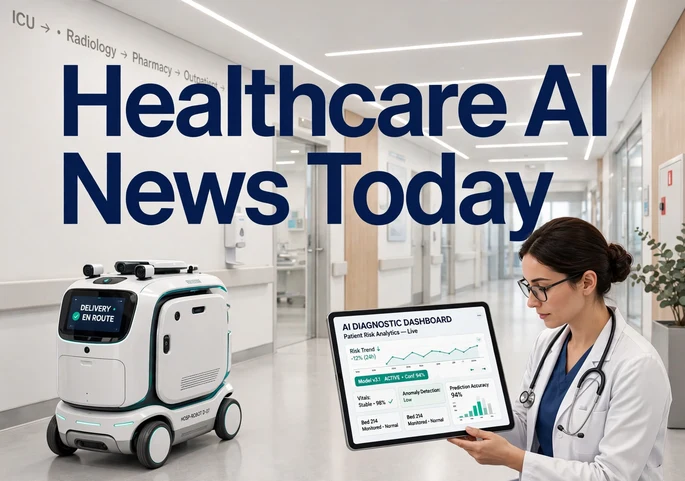
Hospitals are done with AI experiments and are now putting the tools to work. What is really changing inside hospitals this year, and which claims deserve a second look? In this guide to healthcare ai news today, we cover delivery robots, Big Tech partnerships, claims paperwork agents, and ambient note taking, plus the limits that regulators and researchers still flag. We treat these as recent developments, not a dated daily bulletin, because figures change fast and are shown here as reported.
Why Healthcare AI News Today Is About Production, Not Pilots
The biggest shift of 2026 is that hospitals are moving AI from small pilots into daily production use. Stories now focus less on lab demos and more on robots, paperwork, and note taking tools running on real hospital floors. For anyone following AI in healthcare 2026, the useful question is whether a tool saves time safely at scale. Governance work is also growing fast as deployment spreads, which is a healthy sign.
Hospital Robots Return Hours to Staff
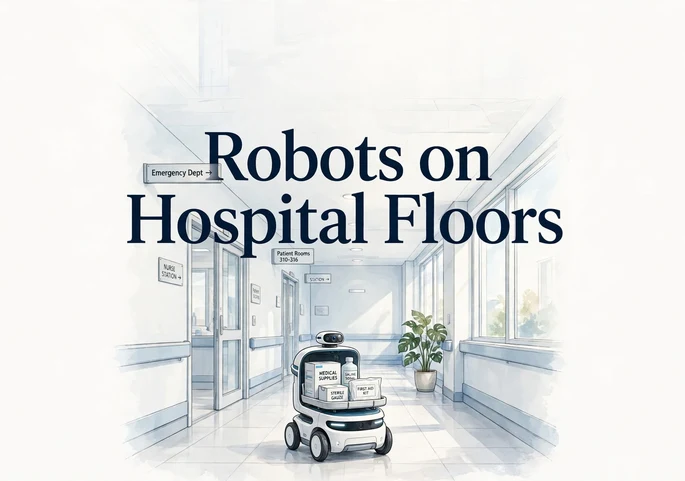
Robots are the easiest part of healthcare ai news today to picture, since they roll through corridors carrying specimens, medications, and equipment. One vendor launched a robot that moves empty beds and projects more than 1,300 staff hours returned per robot each year. Another vendor says its robots passed 1.25 million deliveries across more than 25 hospitals, and one children’s hospital counted over 40,000 deliveries and about 16,000 hours saved. Robots are also increasingly leased instead of sold, and every figure here is a vendor or hospital claim.
Big Tech Partnerships Shape Hospital AI Tools
October 2026 brought several partnerships between large technology firms and health systems. A published benchmark study of a diagnostic AI system reported about 83 percent correct on complex historical cases, compared with about 36 percent for generalist physicians using search tools. That study used past case records, not live patient care, so it is a benchmark result, not proof of real world performance. Another hospital adjusted an open AI model to screen model traffic against its own privacy standards, which improved performance and sharply cut latency, as reported by the hospital. These hospital AI tools show a pattern: big vendors supply the models, and hospitals add their own safety checks.
Cloud Grants and Nursing Pilots Extend the Reach
Other announcements focus on infrastructure and care. A multiyear move of clinical, operational, and research data to a unified cloud platform includes agentic AI workflow tools. Cloud grants of over 1.8 million dollars went to children’s health organizations, including one expanding a machine learning platform that cut genetic diagnosis time by 50 percent for critically ill infants. A nursing pilot also turns recorded patient interactions into structured flowsheet entries that nurses review.
Agentic AI Takes On Insurance Paperwork
Paperwork is where healthcare ai news today shows its clearest return on time. One hospital’s AI agents complete about 1,100 insurance claims a month. Reported results include appeals dropping from 45 minutes to 5 minutes and appeal success rising from 65 percent to 100 percent over nine months, and the agents now help patients find and book clinicians. Still, agentic AI in hospitals sits almost entirely in scheduling, documentation, and prior authorization, not in autonomous diagnosis.
Ambient Scribes Spread Across Health Systems
Ambient scribes listen to a visit and draft the clinical note for the clinician to review. Large rollouts now span dozens of hospitals and hundreds of clinics, and a national veterans health system is expanding its use to every medical center. Major electronic record vendors are shipping more than 100 AI features or bundling a scribe into the platform. If you follow medical AI news, expect this to stay one of the most visible stories, since it touches nearly every clinician.
Reported Figures at a Glance
This list pulls the main numbers together in one place. Each figure comes from public company and hospital statements as summarized in recent coverage, and we did not verify them independently. Prices, results, and rollouts can change quickly, so recheck before you quote them.
- Bed moving robot: more than 1,300 staff hours returned per robot each year (projected by the vendor)
- Delivery robots: over 1.25 million deliveries across more than 25 hospitals
- One children’s hospital: over 40,000 deliveries and about 16,000 hours saved
- Diagnostic AI study: about 83 percent correct versus about 36 percent for generalist physicians using search tools
- Genetic diagnosis platform: 50 percent faster for critically ill infants
- Claims agents: about 1,100 claims a month, appeals cut from 45 minutes to 5 minutes
Protecting Patient Data as Hospital AI Spreads
Every new AI tool touches patient records, so security work has to grow at the same pace. Hospitals need clear access rules, careful vendor reviews, and monitoring of how data moves between systems. Governance teams are growing for this reason. Better security also depends on measuring results, not just buying controls.
A cybersecurity metrics dashboard helps a hospital see whether its defenses work in practice. It can track how fast teams detect and respond to threats, how many critical flaws stay open, and whether patches arrive on time. Leaders can then share trends with the board in plain terms. Our separate guide explains which measures matter most.
Hospitals also need to secure logs, because logs show who touched patient data and when.
A security information and event management system collects those logs in one place and flags suspicious patterns. That helps teams investigate incidents faster and prove what happened. Strong log handling matters even more as AI tools add new data flows.
Where Healthcare AI Still Falls Short
Regulators have authorized over 1,600 AI enabled devices as of September 2026, while generative AI devices remain under FDA discussion, with an August 2026 discussion paper on their regulation, rather than authorized at the scale of imaging tools. Benchmark studies in 2026 found that frontier models still fall short of reliable independent clinical reasoning and need human oversight. That is why the diagnostic comparison above should be read as one study, not proof that AI can replace doctors. Readers of healthcare ai news today should also remember that every figure here is as reported and may change.
Conclusion
Hospitals are using AI where the work is repetitive: moving supplies, writing notes, and handling claims. The strongest results so far are time savings, while diagnosis still needs people in charge. Keep following healthcare ai news today with a simple filter: who reported the figure, and was it checked by someone independent? Recheck any number before you rely on it.
What does healthcare AI news today usually cover?
It usually covers hospital robots, ambient scribes, claims and scheduling agents, and partnerships between health systems and large technology firms. It also covers regulation and safety studies. Most stories are about saving staff time, not replacing clinicians.
Are AI robots really used in hospitals?
Yes, according to vendor and hospital reports. Robots carry specimens, medications, and equipment, and one vendor launched a robot that moves empty beds. Vendors report millions of deliveries, but those numbers are claims and should be rechecked.
Can AI diagnose patients on its own?
Not reliably today. One published study reported strong results for a diagnostic system on complex historical cases, but 2026 benchmark studies found frontier models still need human oversight. Generative AI devices also remain under FDA discussion rather than authorized at scale.
How should I read the figures in AI health stories?
Check who reported the number and whether outsiders verified it. Treat vendor figures as claims, and look for the time period and the size of the sample. Because rollouts and results change quickly, recheck any figure before you share it.
Read More
Keep exploring more Tech Weeklys guides: