
Most AI you have used so far waits for instructions. A new wave of systems no longer does. Agentic AI is software that accepts a goal and then plans, acts through tools, checks its own results, and keeps going until the goal is done, all with limited human supervision. This 2026 guide explains what these systems are, how they work, where they are succeeding, where they are failing, and what to know before you build or buy one.
How Is Agentic AI Different From Generative AI?
The difference comes down to one word: action. Generative AI produces content when you prompt it. You ask a question, it answers. You describe an image, it draws one. Each exchange is a single turn with a single output.
Autonomous agents work differently. Give one a goal like “research five competitors and email me a comparison table by Friday,” and it runs a loop: plan the steps, search the web, read pages, compile the table, and send the email. It decides what to do next based on what it observes, without you spelling out every intermediate step. Generative AI changed how content gets produced. Agent-driven software is changing how work gets done, because it closes the gap between knowing the answer and doing the job.
Think of it this way: a chatbot responds, an agent gets things done.
How Do AI Agents Actually Work?
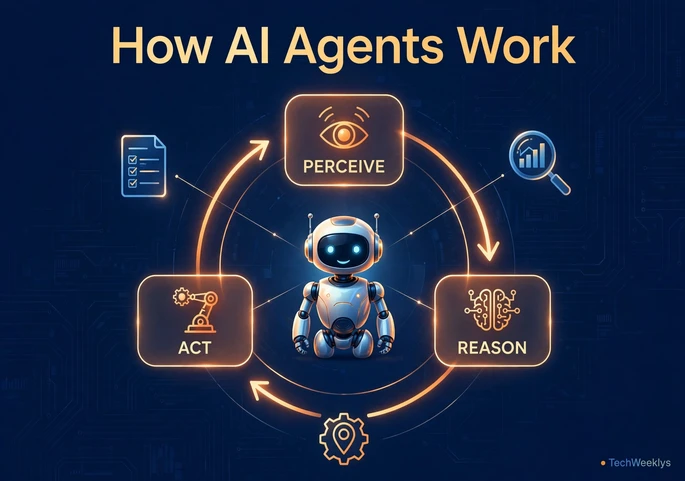
An autonomous agent runs a continuous loop of goal, plan, act, observe, and adjust. Here are the components that make the loop possible.
The model. A large language model serves as the reasoning engine. It interprets the goal, reads information, and decides what should happen next.
The goal. The agent receives an outcome to pursue, not a single question to answer. “Find information about electric vehicles and create a comparison report” is a goal: a target with the freedom to choose how to reach it.
Tools. This is the component that separates agents from chatbots. Tools let the agent interact with the outside world: web search, databases, APIs, code execution, calendars, email, CRMs like Salesforce, payment systems like Stripe, and even full browsers. Without tools, a model can only talk. With tools, it can act.
Planning and memory. The agent breaks a complex goal into sub-tasks and keeps track of what it has already done. It stores context in working memory for the current task and, in more advanced systems, keeps long-term memory across sessions.
Guardrails and feedback. Because a wrong action is far costlier than a wrong answer, serious systems add approval checkpoints, audit logs, spending limits, and sandboxed execution. Human-in-the-loop review before critical actions is standard in production deployments. If you are looking to see these tools in action, the TechWeeklys homepage tracks the events and launches shaping the agent ecosystem.
What Are the Different Types of AI Agents?
Not everything called an agent is equally autonomous. In practice, AI agent systems sit on a spectrum from assisted to autonomous.
Single agents handle focused tasks on their own: researching a topic, resolving a support ticket, or automating a report. They are the most common type in production today, and almost all the systems working reliably right now live on the assisted end of the spectrum, where a human approves key steps.
Multi-agent systems divide a large job among specialized agents that work together. A common pattern pairs a planner with an executor, or a researcher with a writer. A supervisor agent coordinates the specialists. These systems handle enterprise workflows and complex software development, but they are harder to debug when something goes wrong.
Fully autonomous agents run unattended after receiving a goal. This is where the most exciting demos live and where most of the failures happen.
A practical mental model sorts agents by four properties: autonomy (choosing their own next steps), goal-directedness (working toward an outcome, not a reply), action (affecting the world through tools), and iteration (adapting based on results). A system that answers questions from a fixed script is not agentic. A system that researches a company across five websites, compiles a table, and emails it to you is. For a plain-language refresher on the terminology, the tech events glossary breaks down the jargon.
Where Are Autonomous AI Agents Actually Being Used?
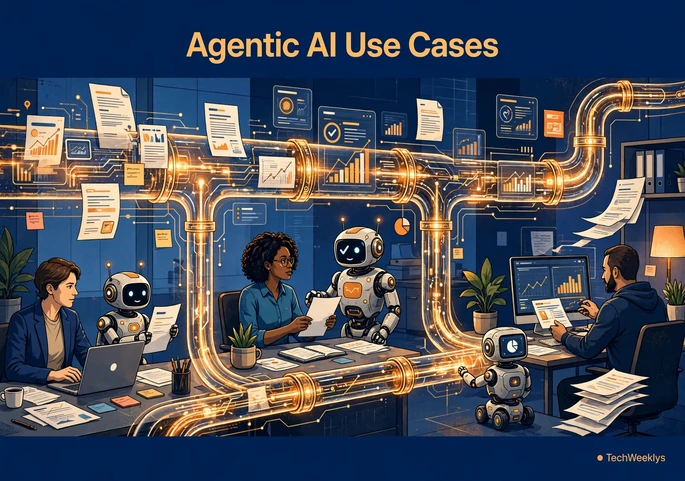
Strip away the hype and autonomous agents are already in production at serious companies across several functions.
Software engineering. Coding agents review pull requests, write tests, debug errors, and even ship features. Developers describe the shift as moving from writing every line to reviewing and directing an agent’s work.
Customer support. Agents read tickets, pull account history from the CRM, attempt resolution, and escalate only the cases they cannot handle. The win here is not replacing support staff but letting a small team handle far more volume.
Sales and marketing. Agents research prospects, personalize outreach, and run multi-step campaigns. Marketing teams use them for SEO research, content drafting, and campaign monitoring.
Operations and finance. Agents reconcile invoices, monitor dashboards, and flag anomalies. Expense approvals and reporting pipelines that used to need dedicated staff now run semi-autonomously.
Many of the announcements driving this shift land at industry gatherings, and our AI Conferences 2026 guide tracks the biggest ones worth attending.
Why Are So Many AI Agent Projects Failing?
Here is the part the vendors downplay. In 2026, agentic AI projects are failing at a striking rate, and industry analysts expect a large share of pilots to be scrapped over the next year. Understanding why is now a core professional skill.
Hallucinations compound. A chatbot’s hallucination is embarrassing. An agent’s hallucination becomes the input for its next five actions, and each step can carry the error further from reality.
Tool selection goes wrong. Agents sometimes pick the wrong API, pass malformed arguments, or misunderstand what a tool returned. Each failed tool call is a chance for the whole run to derail.
Loops never end. Without strict limits, an agent can retry a failing approach indefinitely, burning compute and sometimes budget with it.
Permissions bite. Agents hit access walls they cannot anticipate: a locked file, an expired token, a rate limit.
Planning stays shallow. Many agents produce plans that look sensible in outline but collapse on the details. They are often worse at long-horizon planning than their demos suggest.
The takeaway is not that this technology is fake. It is that the failure mode has changed. A chatbot’s worst failure is a wrong answer. An agent’s worst failure is a wrong action: deleting a file, sending an email, moving money, or approving a claim. That asymmetry is why serious deployments put humans in the approval path for anything irreversible, keep full audit logs, set budget caps, and sandbox the execution environment. If you are evaluating an agent product, ask the vendor about these controls before you ask about the features.
How Should You Start Using AI Agents?
If you are a founder, manager, or developer looking at autonomous agents for the first time, start narrow and expand carefully.
Pick a bounded task. Choose work that is repetitive, clearly defined, and low-stakes if it goes wrong. Report generation, meeting prep, and lead research are good candidates.
Require human approval. Keep a person in the loop for every action that sends a message, moves money, or changes customer data.
Measure from day one. Track task success rate, cost per run, latency, and how often a human has to intervene. These numbers tell you whether the agent is actually cheaper than the manual process it replaces. Then iterate: the first version will underperform, so treat development like hiring, with clear instructions, observed performance, and feedback over weeks, not hours.
For a broader view of how the AI world is converging around these systems, see our pillar article on What Is Tech Week, which covers the conference ecosystem where agent launches now dominate the headlines.
Conclusion
Agentic AI is the shift from software that answers to software that acts: systems that pursue a goal by planning, using tools, and adapting until the job is done. The same autonomy that makes agents powerful makes their failures expensive, which is why the winners in 2026 are the teams that pair ambitious goals with serious guardrails. Start with a bounded task, keep humans approving irreversible actions, and measure relentlessly.
Frequently Asked Questions
What are autonomous AI agents, in simple terms?
Autonomous AI agents are software systems that take a goal and work toward it on their own, planning steps, using tools like web search and APIs, and adjusting based on results, instead of just answering a single question. A chatbot responds, an agent gets things done.
How is an AI agent different from a chatbot?
A chatbot answers one message at a time and rarely touches outside systems. An autonomous agent accepts a goal, runs many steps in sequence, calls tools such as browsers and databases, and produces actions plus results rather than just replies.
Is agentic AI the same as an AI agent?
The terms overlap but are not identical. An AI agent is an individual system that pursues a task or goal. Agentic AI is the broader approach or architecture in which agents reason, plan, and act. A multi-agent system is several agents cooperating on different parts of a larger task.
What are the biggest risks of autonomous agents?
The main risks come from autonomy: an agent’s wrong action can delete files, send messages, or move money, unlike a chatbot’s wrong answer which only wastes time. Hallucinations compound across steps, tool calls fail, and loops can run forever. Production systems counter this with human approvals, audit logs, budget limits, and sandboxed execution.
Read More
