
A single infected laptop can freeze an entire company overnight. The culprit is usually ransomware: malicious software that encrypts a victim’s files and demands payment, often in cryptocurrency, in exchange for the decryption key. Defending against ransomware attacks has become one of the most urgent jobs in business security, because these attacks no longer target only large corporations. In 2026, small and midsize businesses take the hardest hits, and the average attack moves from first intrusion to full encryption in a matter of days.
This guide explains exactly how ransomware works, why it has become so damaging, and what your business can do to stop it. Every recommendation below is practical, and most of them cost far less than a single incident.
How Do Ransomware Attacks Start?
Ransomware attacks usually begin with something ordinary, not a dramatic hack. The most common entry points are phishing emails with malicious attachments or links, stolen login credentials bought on criminal marketplaces, and unpatched software on internet-facing systems like VPN gateways and firewalls.
In 2026, attackers also buy their way in. So-called initial access brokers specialize in breaking into networks and then selling that access to ransomware groups. This division of labor is why attacks have scaled so fast. One more shift matters: security researchers report that unpatched edge devices now rival phishing as the top initial entry point, which makes prompt patching one of the highest-value defenses you can run.
Once inside, the attacker rarely detonates the ransomware right away. There is usually a quiet period while they explore your network, and that delay is your best chance to catch them.
What Happens After Attackers Break In?
After gaining access, attackers follow a predictable playbook. First they establish persistence, planting tools that survive reboots so they keep access even if you restart machines. Then comes discovery: they map your network to find the most valuable targets, such as the domain controller, the file server, and, critically, your backup systems.
Next is lateral movement. The attacker hops from the first infected machine to others, escalating privileges along the way, until they control enough of the environment to cause maximum damage. Industry research puts the median time from initial intrusion to ransomware deployment at roughly five days, and the fastest attackers have been observed reaching the data theft stage in just 72 minutes.
This is also when data theft happens. Modern groups copy your sensitive files to their own servers before they encrypt anything. We explain the jargon behind these stages, from lateral movement to data leak sites, in our tech events glossary.
What Is Double Extortion and Why Does It Work?
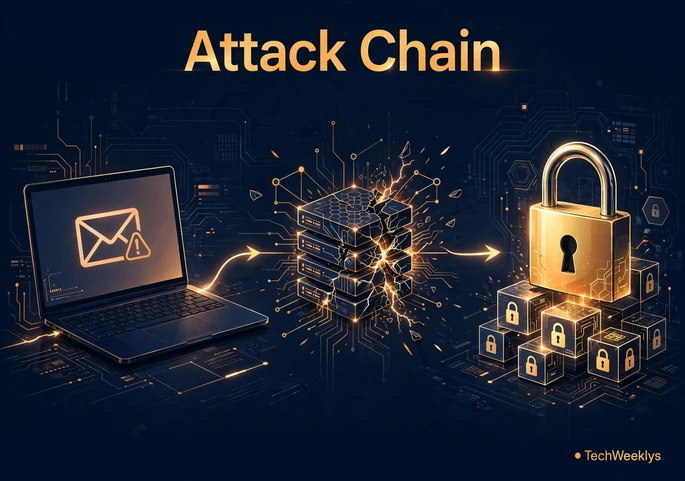
Double extortion is the tactic that made ransomware so much harder to beat. It works in two stages. First, the attackers steal your data. Then they encrypt your systems and demand a ransom for the decryption key. If you refuse to pay because you have backups, they threaten to publish or sell the stolen data unless you pay a second time.
The pressure is deliberate. Attackers post samples of stolen files on public leak sites to prove they have the data and to embarrass the victim into paying. Research counted between 7,458 and 7,960 victims listed on ransomware leak sites during 2025, which shows how industrialized this shaming machine has become.
Some groups go further with triple extortion, contacting your customers or partners directly to multiply the pressure, and even quadruple extortion, which adds distributed denial-of-service attacks against your public services during negotiations. Because of exfiltration, even a perfect backup does not fully solve the problem. Preventing data theft matters just as much as preventing encryption.
Why Are Small Businesses the Main Target?
The image of ransomware as a big-company problem is outdated. Verizon’s 2025 Data Breach Investigations Report found ransomware involved in 88% of breaches affecting small and midsize businesses, compared with 39% for larger organizations. Attackers target smaller firms because they hold valuable data but rarely have dedicated security teams.
The economics favor the criminal. Ransomware as a Service, or RaaS, lets skilled developers rent out ready-made ransomware to less technical affiliates, who then carry out the intrusions and split the profits. Generative AI has made this worse by helping attackers write convincing phishing messages and scan thousands of businesses per hour for unpatched systems.
Founders who want to learn how security-minded teams stay ahead often pick up these defensive playbooks at startup gatherings like the ones profiled in What Is Tech Week.
How Can Businesses Prevent Ransomware Attacks?
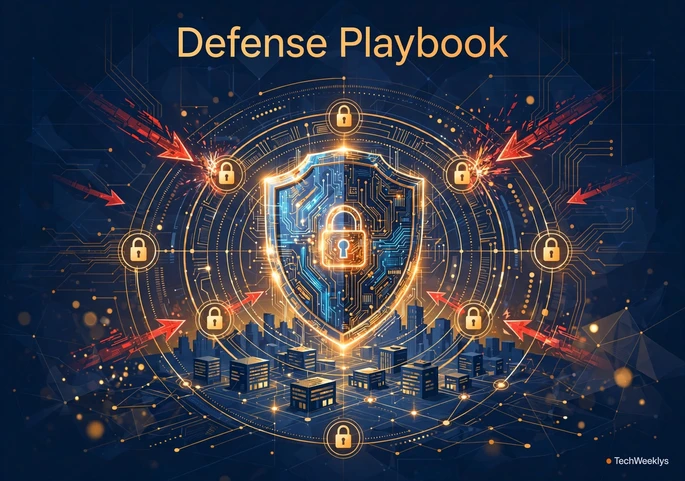
There is no single product that stops ransomware attacks. Prevention works in layers, and the layers below stop the vast majority of incidents.
Enforce multi-factor authentication everywhere. Stolen passwords feed a huge share of breaches. MFA on email, VPN, remote desktop, and cloud apps shuts down the credential-theft route, and it is the cheapest high-impact control available.
Patch fast and consistently. Most successful intrusions exploit vulnerabilities that already had patches available for weeks or months. Set a strict window, such as 72 hours, for critical patches on internet-facing systems.
Back up with the 3-2-1-1 rule. Keep three copies of your data, on two different types of media, with one copy off site, plus one immutable copy that nobody can alter or delete for a set period. Attackers deliberately hunt for backups first, so at least one copy must be offline or immutable, and you must test restores regularly. An untested backup is not a backup.
Segment your network. If one machine gets infected, the ransomware should not be able to reach everything else. Separate critical servers, employee workstations, and guest networks so an infection stays contained.
Deploy endpoint detection and response. Traditional antivirus relies on known signatures, but modern ransomware changes constantly. EDR tools watch for suspicious behavior in real time and can isolate an infected machine before encryption spreads.
Train your people. Phishing simulations and short, regular training sessions teach staff to spot malicious emails. One informed employee can stop an attack at the front door.
Security teams also sharpen these skills at dedicated events throughout the year. For background on one of the security community’s most prominent gatherings, read our Cyber Week guide.
What Should a Business Do When Hit by Ransomware?
Speed and discipline matter more than heroics. Follow these steps in order.
First, isolate affected systems from the network immediately, but do not power them off, since memory evidence can help investigators. Second, activate your incident response plan and assign clear roles: who calls the IT provider, who contacts legal counsel, who handles customer communication. Third, call in professional help. Your cyber insurer, a digital forensics firm, or law enforcement can guide evidence preservation and recovery.
Fourth, determine the scope. Identify which systems are encrypted, whether data was stolen, and what notification obligations you face under privacy laws. Fifth, restore from your clean, immutable backups rather than paying, and only bring systems back online after confirming the attacker has been fully removed. For ongoing independent coverage of threats like these, bookmark the TechWeeklys homepage.
Should You Ever Pay the Ransom?
Law enforcement agencies advise against paying, and there are strong practical reasons to agree. Payment does not guarantee you get a working decryption key, and it marks your business as willing to pay, which invites repeat attacks. There may also be legal risk if the attackers are a sanctioned group. The better investment is the prevention stack above plus a tested incident response plan, because recovery without payment is almost always cheaper than payment plus recovery.
Frequently Asked Questions
What is ransomware in simple terms?
Ransomware is malicious software that locks you out of your own files by encrypting them, then demands payment for the key to unlock them. Modern variants also steal your data first and threaten to leak it, which is called double extortion.
Are ransomware attacks increasing in 2026?
Yes. Industry tracking shows ransomware activity continuing to climb through 2026, with small and midsize businesses absorbing the largest share of incidents. The rise of Ransomware as a Service and AI-assisted phishing has made attacks faster and more frequent, with median intrusion-to-encryption times of about five days.
What is the first thing to do during a ransomware attack?
Isolate infected machines from the network right away, then activate your incident response plan and call your IT security provider or insurer. Do not delete anything or pay the ransom in a panic, since hasty actions can destroy evidence and rarely improve the outcome.
How often should a business test its backups?
Test restores at least quarterly, and monthly if your business depends heavily on its data. A backup you have never restored from is only a theory. Testing confirms the backups are complete, uncorrupted, and stored where ransomware cannot reach them.
Conclusion
Ransomware in 2026 is faster, more automated, and more focused on small businesses than ever before. But the defense playbook is proven: enforce MFA, patch quickly, keep immutable offline backups, segment your network, deploy behavioral endpoint protection, and train your team. Recovering from ransomware attacks costs far more than preventing them, so the smartest move is to build these layers now, before the ransom note ever appears.
Read More
